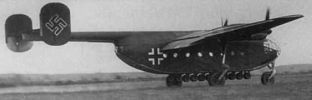
Arado AR 232A680 viewsThe Luftwaffe's Arado AR 232A combat area transport flew for the first time in the summer of 1941, and was a state-of-art flying machine abounding with technological firsts and innovations.
Performance:
Cruise Speed: 288km/h (180 mph)
Range with max. payload (9,921 lb. (4500kg)): 660 miles (1050km)
Min. field lenth at gross weight: 3,100 ft. (945m)
|
|
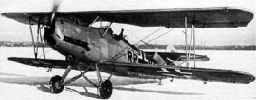
Arado Ar 66c617 viewsThe Ar 66 equipped flying schools from 1933 until into WWII. Over 6000 were built, maybe even 10000. Some were used as night harassments bombers on the eastern front.
|
|
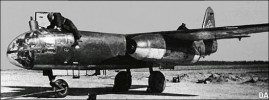
Arado Ar 2401217 viewsThe German Arado 234 was the very first purpose-built jet bomber. While the Ar-234 had very little influence on the outcome of World War II, being much too late and too few in number, it had influence on later aircraft designs. The Ar-234B could be configured either as a bomber or reconnaissance aircraft. It weighed about 5.2 tonnes (11,464 pounds) empty, and about 8.43 tonnes (18,850 pounds) fully loaded. Maximum bomb load was about 1.5 tonnes, carried externally. When used as a reconnaissance aircraft, the AR-234B carried a pair of 300 liter (79 US gallon) drop tanks in place of the bombs.
The powerplants consisted of a pair of Junkers Jumo 004B turbojets, with 900 kilograms (1,980 pounds) thrust each. Maximum speed without bombs or drop tanks was 740 KPH (460 MPH) at 6,100 meters (20,000 feet), but the speed dropped to as low as 660 KPH (410 MPH) with external loads. The prototypes had actually been a good 30 KPH faster than the Ar-234B, due to the more slender fuselage allowed by the lack of landing gear. Tricycle landing gear was fitted. As the Ar-234 landed at high speed, it had a drag chute as standard equipment; it was one of the first aircraft to do so. The rounded nose of the aircraft was covered with plexiglas, giving the pilot an excellent view to the front, but no view to the back except through a periscope. The periscope, which was not provided in the Ar-234 prototypes, also served as a sight for dive-bombing attacks. As a bomber, the Ar-234 was something of a failure. It could not carry enough of a bombload to match the destructive power of the big heavy bombers that were smashing the Reich. However, as a reconnaissance aircraft it proved able to bring back intelligence from airspace denied to prop-driven aircraft.
There were also a number of innovations in the Ar-234 that would be seen in later aircraft.
|
|
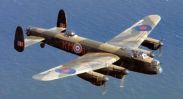
Avro Lancaster450 viewsThe Lancaster bomber was one of the most famous bombers of World War 2 its bomb load exceeding that of any other aircraft in full-scale production at the time. Only two examples are flying at the present time although there are several static examples in existence. With four Rolls-Royce Merlin engines giving a top speed of 287 mph and a range of 1,660 miles, the Lancaster’s’ seven-man crew could provide a knockout punch with a typical load of 18,000 pounds of high explosive over the target. Along with the Handley Page Halifax, the Lancaster gave the UK the offensive striking power needed to penetrate German air defenses during World War II.
|
|
|
|
|
|


