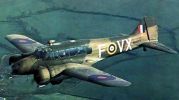
Avro Anson Mk II877 viewsThe Anson first flew in 1935 and went on to serve in a wide variety of roles during the Second World War. Over 11 000 were built and the Anson was still flying for the Royal Air Force in 1968. Anson II's were used primarily to train pilots to fly multi-engined aircraft such as the Lancaster. However wireless operators, navigators, and bomb-aimers used the Anson as well. As a training aircraft the Anson was docile, forgiving, and easy to fly.
|
|

Avro Lancastrian557 viewsIn 1944 Avros, at their Waddington factory, began a conversion of the Lancaster, to follow that, which had been made by Victory Aircraft in Canada. This was to make an aircraft for long-range navigational flights. The nose and tail sections were modified and extra fuel tanks added. The new machine was named the Avro Lancastrian; and was delivered to The Empire Air Navigation School at RAF Shawbury.The first plane was called Aries, and it set off on the first, circumnavigation of the world. QANTAS airline of Australia used Lancastrians, on their London to Australia flights. BSAA also used Lancastrians on regular flights to South America; as did Flota Aerea Mercante Argentina. The Canadian Authorities had established a regular route from Canada toBritain earlier. This plane had a range of 4,100 miles with a 7,500 lb payload.
|
|
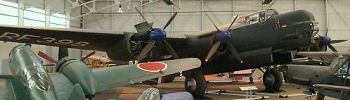
Avro Lincoln463 viewsHeavy bomber developed from the Lancaster, and initially known as the Lancaster B Mk.IV. The Lincoln, bigger and with a longer range, was developed for a British campaign in the far East, but was never used in this role because of the end of WWII. It compared unfavourably with more modern designs like the B-29, but was kept in service until 1963 and saw in combat over Kenya and Malaya. One was shot down on its way to Berlin in 1957.
|
|
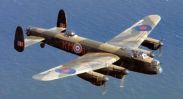
Avro Lancaster450 viewsThe Lancaster bomber was one of the most famous bombers of World War 2 its bomb load exceeding that of any other aircraft in full-scale production at the time. Only two examples are flying at the present time although there are several static examples in existence. With four Rolls-Royce Merlin engines giving a top speed of 287 mph and a range of 1,660 miles, the Lancaster’s’ seven-man crew could provide a knockout punch with a typical load of 18,000 pounds of high explosive over the target. Along with the Handley Page Halifax, the Lancaster gave the UK the offensive striking power needed to penetrate German air defenses during World War II.
|
|
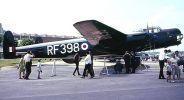
Avro Lincoln478 viewsHeavy bomber developed from the Lancaster, and initially known as the Lancaster B Mk.IV. The Lincoln, bigger and with a longer range, was developed for a British campaign in the far East, but was never used in this role because of the end of WWII. It compared unfavourably with more modern designs like the B-29, but was kept in service until 1963 and saw in combat over Kenya and Malaya. One was shot down on its way to Berlin in 1957.
|
|
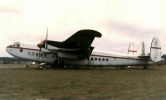
Avro 685 York616 viewsA transport development of the Lancaster, with a bigger fuselage of rectangular cross-section and an additional tailfin. Production during WWII was limited because it was agreed that the US would supply transport aircraft.
|
|
|
|


