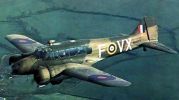
Avro Anson Mk II877 viewsThe Anson first flew in 1935 and went on to serve in a wide variety of roles during the Second World War. Over 11 000 were built and the Anson was still flying for the Royal Air Force in 1968. Anson II's were used primarily to train pilots to fly multi-engined aircraft such as the Lancaster. However wireless operators, navigators, and bomb-aimers used the Anson as well. As a training aircraft the Anson was docile, forgiving, and easy to fly.
|
|
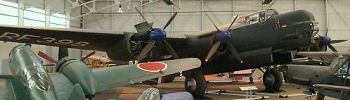
Avro Lincoln463 viewsHeavy bomber developed from the Lancaster, and initially known as the Lancaster B Mk.IV. The Lincoln, bigger and with a longer range, was developed for a British campaign in the far East, but was never used in this role because of the end of WWII. It compared unfavourably with more modern designs like the B-29, but was kept in service until 1963 and saw in combat over Kenya and Malaya. One was shot down on its way to Berlin in 1957.
|
|
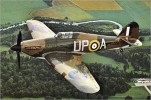
HAWKER HURRICANE Mk IIB546 viewsThe Hurricane bore the brunt of the fighting during the Battle of Britain &, of the 14,00 built, only three examples remain airworthy. This particular machine is painted to represent the aircraft of the late Squadron Leader Archie McKellar
|
|
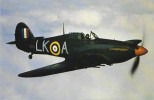
HAWKER HURRICANE Mk IIC661 viewsThis most famous partner to the Spitfire was the predominant fighter in use by the RAF during the Battle of Britain. Designed by Sidney Camm, this aircraft was the first RAF fighter to exceed 300mph & the first eight gun monoplane to enter service. This aircraft saw service throughout the war & was the mount of many great pilots of the War years. It is an interesting & judicious point to note that there were 1,326 Hurricanes & 967 Spitfires on strength during the Battle of Britain, a fine testimony to this fine aeroplane, This particular aircraft was flown by Sqn. Ldr. D. G. Smallwood.
|
|
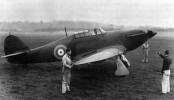
Hurricane MKI593 views The new Mk.I included a deHaviland or Rotol constant-speed metal propeller, ejector exhaust stacks for added thrust, metal-covered wings, armour and other changes. At the start of the war the RAF had taken on about 500 of this later design, and it formed the backbone of the fighter squadrons during the Battle of France and into the Battle of Britain.
Although it may have been an older design, the Hurricane was still a worthy fighter on its own and a reasonable match for the Messerschmitt Bf 109 it faced. In the photo The first production Hurricane Mk.I at [[Brooklands]], November 1937.
|
|
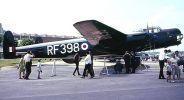
Avro Lincoln478 viewsHeavy bomber developed from the Lancaster, and initially known as the Lancaster B Mk.IV. The Lincoln, bigger and with a longer range, was developed for a British campaign in the far East, but was never used in this role because of the end of WWII. It compared unfavourably with more modern designs like the B-29, but was kept in service until 1963 and saw in combat over Kenya and Malaya. One was shot down on its way to Berlin in 1957.
|
|
Westland Lysander mk-II Polish markings531 viewsPolish Raf markings - model for cfs2 - fs2004 - fs2002 simulator, on sale at Icarus:
http://www.icarusgold.com/Lysander.htm
|
|
Westland Lysander mk-I burma 1942499 viewsmkI burma 1942 - model for cfs2 - fs2004 - fs2002 simulator, on sale at Icarus:
http://www.icarusgold.com/Lysander.htm
|
|
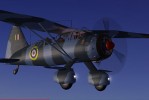
Westland Lysander mkII IAF542 viewsmkII IAF service 1941-43 - model for cfs2 - fs2004 - fs2002 simulator, on sale at Icarus:
http://www.icarusgold.com/Lysander.htm
|
|
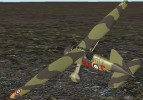
Westland Lysander mkIIIa RAF531 viewsmkIIIa RAF - model for cfs2 - fs2004 - fs2002 simulator, on sale at Icarus:
http://www.icarusgold.com/Lysander.htm
|
|
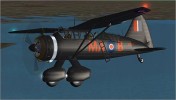
Westland Lysander mkIIIsd N.161 Squadron613 viewsmkIIIsd 1942 N161 Squadron - model for cfs2 - fs2004 - fs2002 simulator, on sale at Icarus:
http://www.icarusgold.com/Lysander.htm
|
|
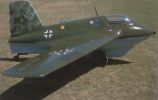
Messerschmitt Me 163B-1493 viewsAlthough the aircraft's two MK 108 30mm cannons were capable of downing a four-engine bomber with only three or four hits, the Komet's high speed, coupled with the cannons' slow rate of fire and short range made effective gunnery nearly impossible against the slow moving bombers. As a result, Me 163 pilots recorded a total of only nine kills. Although capable of reaching its service ceiling of 12,100 m (39,690 ft) in just under three-and-a-half minutes, the Me 163 carried only enough fuel for eight minutes of powered flight. An improved variant of the aircraft with a greater endurance and a tricycle landing gear, designated the Me 163 C, was also produced in small numbers before the war's end, but was not flown operationally.
|
|
|
|


