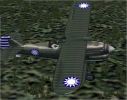
Fiat CR-32 Chinese Air Force803 viewsFiat CR-32 Chinese Air Force, one of the skins included with 3 models and 11 liveries on sale at:
http://www.icarusgold.com/cr32.htm
|
|
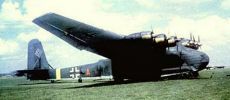
Messerschmitt Me 323794 viewsA powered derivative of the Me 321, the Me 323 proved to be a successful aircraft. Several variants were produced including a Gunship and bomber. This vulnerable transport suffered heavily at the guns of Allied fighters. This version also carried several tonnes of armor and bulletproof glass. Eventually it was decided that escort fighters would be more effective and this version did not see wide-spread production.
|
|
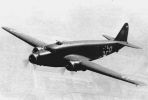
savoia Marchetti SM82 Canguru788 views
|
|
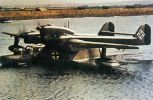
Blohm und Voss BV 138762 viewsThe first prototype which was ready in July 1937 had seveare problems in the air and on the water. A general re-design of the construction followed. Some BV 138 A's were used as transporters for the norwegian campaign in 1940, but late in June 1941 the BV 138 B's saw their service in the role they were constructed for, as sea-reconnaissance planes. From then on they patroled the North-sea and the Arctic-sea and shadowed the well known North-Cape convoys.
The version BV 138 MS was equipped with a mine-sweeping gear and the BV 138 C-1 which was equipped with Radar saw service in anti U-boat attacks.
|
|
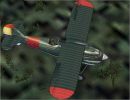
Fiat CR-32 belchite republican captured 1937755 viewsFiat CR-32 belchite republican captured 1937, one of the skins included with 3 models and 11 liveries on sale at:
http://www.icarusgold.com/cr32.htm
|
|
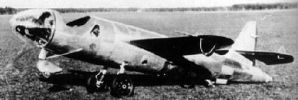
Heinkel He 176732 viewswas the world’s first aircraft to be propelled solely by a liquid-fuelled rocket, making its first powered flight on July 20 1939 with Erich Warsitz at the controls. The He 176 was built to utilise one of the new Walter engines. It was a tiny, simple aircraft, built almost entirely out of wood and lacking even an enclosed canopy. It had a conventional, fixed, tricycle undercarriage, but relied on the weight of the pilot to actually rest on its wheels. Empty, the tail of the plane rested on the ground. Heinkel demonstrated the aircraft to the RLM, but official disinterest led to the abandonment of the company's rocket propulsion programme. The He 176 was placed in the Deutsches Technikmuseum ("German Technical Museum") in Berlin, where it was destroyed in an air raid during World War II.
|
|
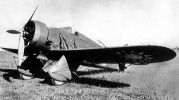
Breda Ba.27731 viewsLow-wing fighter monoplane, with struts and bracing wires, an open cockpit and fixed landing gear. The original mixed construction version was unsatisfactory. It was completely redesigned with an all-metal construction. It was still rejected by the Italian air force, but 11 were built for China.
|
|
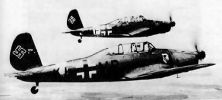
Arado Ar 96720 viewsAdvanced trainer monoplane. At least 11546 built during WWII, and production continued in Czechoslovakia until 1948.
Type: Ar 96B-5
Function: trainer / liaison
Year: Crew: 2 Engines: 1 * 360kW Argus As 10MA-1
Speed: 330km/h Ceiling: 7000m Range: 990km
Armament: 1*mg7.9mm
|
|
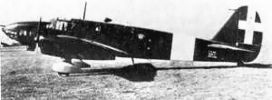
Caproni Ca.309716 viewsSmall twin-engined reconnaissance bomber. The Ca.309 was a low-wing monoplane of mixed construction and with fixed landing gear. 243 were built.
|
|
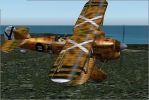
Fiat Cr-32 asso di bastoni712 viewsFiat Cr-32 asso di bastoni - Megapack 3 models 11 liveries on sale at:
http://www.icarusgold.com/cr32.htm
|
|
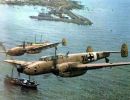
Messerschmitt Bf110707 viewsWilly Messerschmitt however made a creditable attempt with the Bf110, resulting in a machine at that time faster than the Bf109 and similar in speed to the Hawker Hurricane, (end of 1936).
The Bf110 was also tried as a bomber and a night fighter, the latter being its more successful role.
But it must be said that long range, speed, and manoeuvrability, are not mutually compatible and the Bf110 never was more than a maid of all work.
|
|
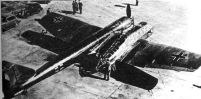
Blohm und Voss BV 141704 viewsThe Bv-141 was a very unusual, asymmetric aircraft. The configuration was adopted to give excellent all-round view from a single-engine aircraft. An extensively glazed nacelle was fitted to the left of a slender tail boom. The Bv-141A (with symmetrical tailplane) was an excellent aircraft but the RLM rejected it as underpowered. The more powerful Bv-141B (with asymmetrical tailplane) had some handling problems. Both types had hydraulic problems.
Its first flight, on 25 February 1938, proved the Bv-141 to be more airworthy than its detractors wanted to believe. Over the next two years three Bv-141A prototypes and 10 Bv-141B production aircraft were completed, but the poor bird never shook the stigma of its disfigured appearance and the Folke Wulf Fw-189A was the winner of the contract.
|
|
|
|


